Structural Evolution
We use multiscale simulations to study how the surface atomic structure and morphology of two-dimensional materials evolve, identifying the principles behind these changes.
Yujin Ji Research Group · Soochow University
We simulate and design two-dimensional materials for energy storage and conversion, linking atomic structure to material performance.
FUNSOM, Soochow University · Youyong Li Research Group
EXPLORING MATERIALS, AT THE ATOMIC SCALE.
01 / ABOUT THE GROUP
Understanding materials through simulation.
Exploring energy at the atomic scale.
The Yujin Ji Research Group is part of Prof. Youyong Li's group at the Institute of Functional Nano & Soft Materials (FUNSOM), Soochow University. We focus on the theoretical simulation and design of two-dimensional materials for energy storage and conversion. Through multiscale modeling, we investigate how surface atomic structures and morphologies evolve, uncover surface reaction mechanisms, and connect atomic and electronic structure with material performance. Combining these insights with databases of two-dimensional materials, we conduct high-throughput screening, material design, and performance optimization to guide the development of new energy materials.
02 / PRINCIPAL INVESTIGATOR
Institute of Functional Nano & Soft Materials (FUNSOM), Soochow University

Associate Professor · Yujin Ji
yjji@suda.edu.cnTheoretical simulation and materials design
Outstanding Young Scholar, Soochow UniversityPhD, Soochow University, China
Joint PhD training, The University of Texas at Austin, USA
Bachelor's degree, Jiangsu University, China
03 / RESEARCH DIRECTIONS
Understanding material properties, starting with atomic structure.
Learn moreWe use multiscale simulations to study how the surface atomic structure and morphology of two-dimensional materials evolve, identifying the principles behind these changes.
We investigate surface reactions on two-dimensional materials at the atomic and electronic scales, identifying key reaction steps and the factors that control them.
We connect the microscopic structure of two-dimensional materials with their macroscopic properties, providing a theoretical basis for improving performance.
We combine databases of two-dimensional materials with high-throughput screening to identify promising systems for energy applications.
We use theoretical insights to design and optimize two-dimensional energy materials for storage and conversion applications.
A NOTEBOOK FOR YOUR FIRST CALCULATION
Explore the principles, input files, parameters, and research tasks of computational chemistry, step by step.
04 / OUR PEOPLE
Learning and growing through shared discovery.

PhD student · Entered 2024
Research Battery Materials Modeling & Design
1036654816@qq.com ↗

Master's student · Entered 2025
Research Crystal Structure Generation
3302356097@qq.com ↗05 / LIFE IN THE GROUP
Moments worth remembering, beyond the research.
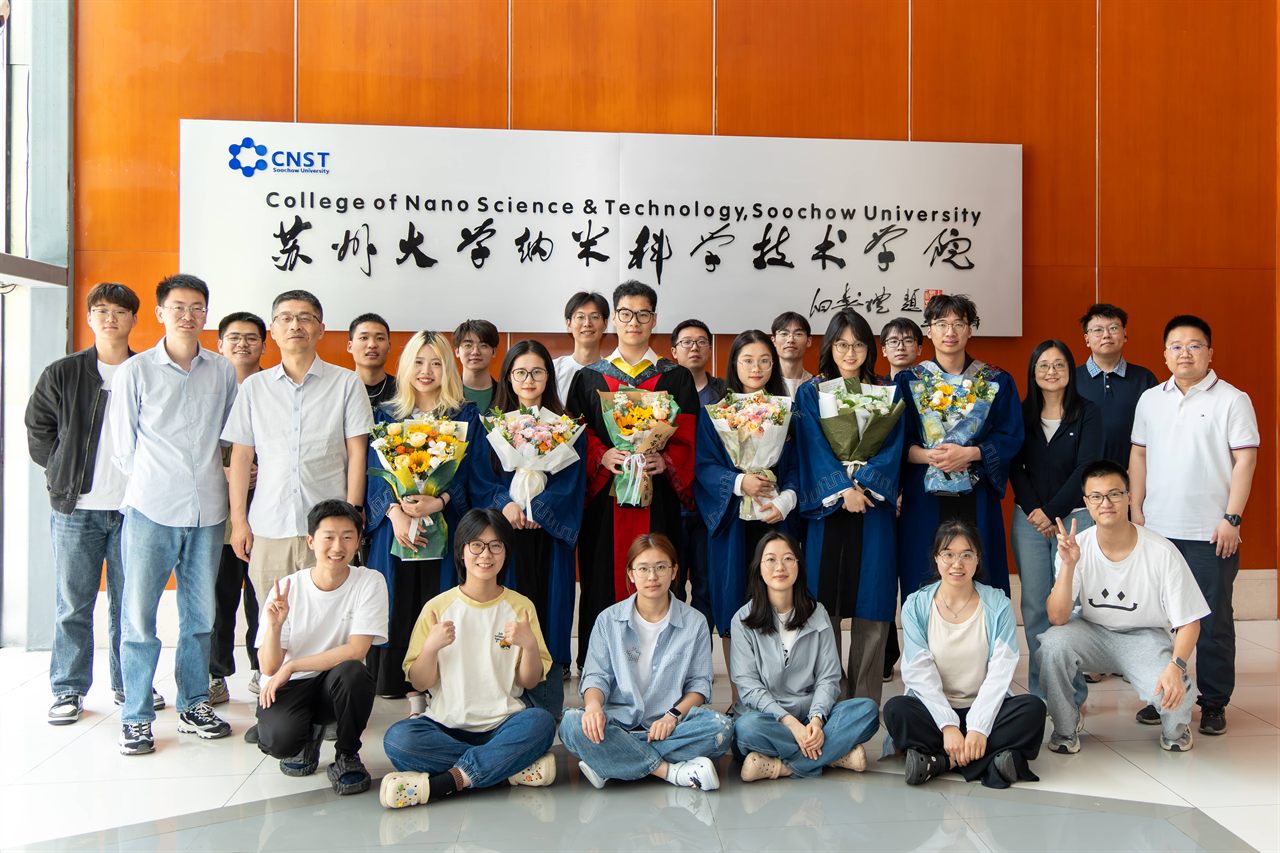
Dingyanyan Zhou, from the Class of 2026, successfully completed the thesis defense. Students and faculty gathered for a commemorative photo.

Students explored Wufeng Mountain together, following the China-shaped hiking route and enjoying the spring scenery.
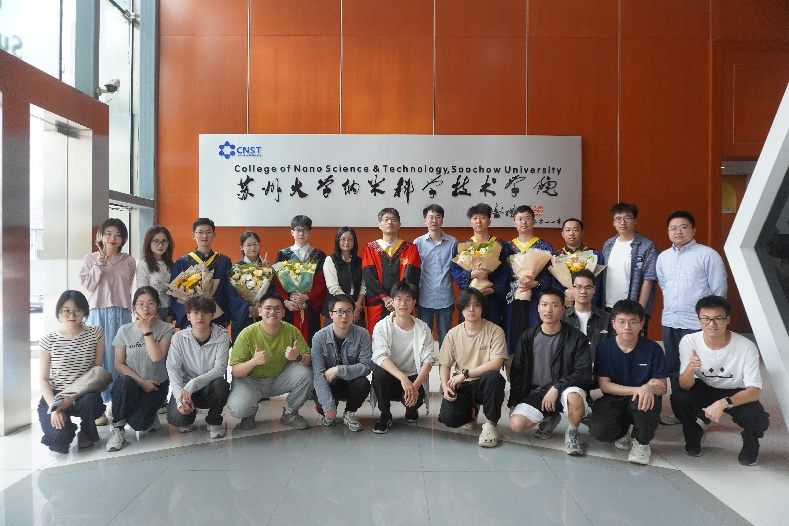
Our Class of 2025 students successfully completed their thesis defenses. Students and faculty gathered to celebrate.
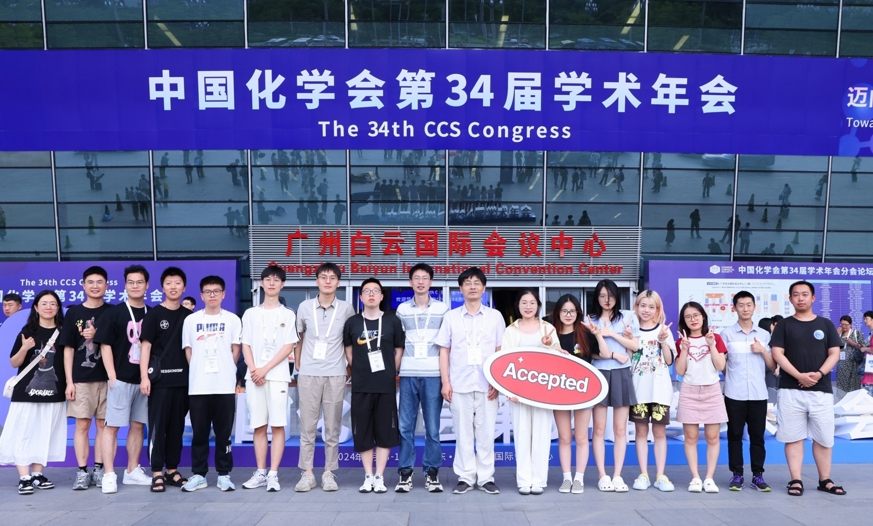
The group attended the 34th Chinese Chemical Society Congress, celebrating the acceptance of their research with a photo outside Guangzhou Baiyun International Convention Center.
06 / SELECTED PUBLICATIONS
Theoretical insights into materials science.
From atomic-scale understanding to materials design and energy conversion.
Selected papers · UpdatedNature
Water Electrolysis in Acid · Crystal-phase DesignCrystal-phase design produces two-dimensional layered Co3O4 with octahedral coordination, improving activity and stability for oxygen evolution in acid and offering a route toward less reliance on precious metals in water electrolysis.
Nature Materials
Symmetry-driven epitaxy produces metastable pentagonal two-dimensional PdTe2. Theoretical calculations help characterize its lattice, phonons, and electronic structure.
Nature Nanotechnology
Combining control of precursor reduction rates with interfacial lattice matching directs the growth of metallic heterostructures, improving their catalytic performance for ethanol oxidation.
Nature Catalysis
High-valence metals tune the oxidation-cycle energetics of Fe, Co, and Ni, revealing how multimetal catalysts can achieve greater oxygen-evolution activity.
Nature Communications
Plasmonic charge accumulation enables continuous-flow photooxidation of methane to methanol under mild conditions.
Published online Dec 2025 · Assigned to a 2026 volumeNature Communications
Synergistic dipoles accelerate directional charge transport for the solar coproduction of hydrogen and benzaldehyde.
Nature Communications
Single Ni atoms and the Ru/RuO2 interface tune H and OH adsorption, improving alkaline hydrogen-oxidation activity and CO tolerance.
Advanced Materials
Single Ni atoms in hexagonal crystal cavities activate a built-in polarization field, promoting charge separation during the photoreforming of biomass derivatives.
Journal of the American Chemical Society
Crystal-phase rearrangement reduces lattice mismatch, enabling atomic replacement while preserving nanomorphology and expanding the design space of noble-metal intermetallics.
Journal of Physical Chemistry C, 2018, 122(5), 3123-3129.
Journal of Materials Chemistry A, 2017, 5(4), 1734-1741.
Nanoscale, 2019, 11, 454-458.
Nature Communications, 2019, 10, 2149. Co-first author
07 / GET IN TOUCH
Discover our research and opportunities to join the group.